"How to pot a houseplant in a self-watering planter with Lechuza pon semi-hydro"
The Plant Parlour podcaster, Gemma Haigh demonstrates how to repot with Lechuza PON semi hydro. Her practical guide tells you everything you need to know about making the switch from soil to self-watering.
Do you want to give potting with Lechuza pon a go, but you’re not sure where to start? This handy repotting guide will help you with your houseplants, taking them from soil-based-fungus-gnat-heaven to a more forgiving semi hydro substrate.
You’ll learn how to repot your houseplant in a self-watering planter with Lechuza pon, how you know when to repot, and how to give your plant what it needs following the repot. We’ll also be exploring whether you need a plastic nursery pot to repot your plant!
In addition, we’ll be going into more depth about what you can expect from repotting with Lechuza pon and whether it’s the right substrate for your houseplants. If you want to know more about the benefits of using Lechuza pon semi-hydro, then check them out here!
Do I need a nursery pot to repot with a self-watering planter?
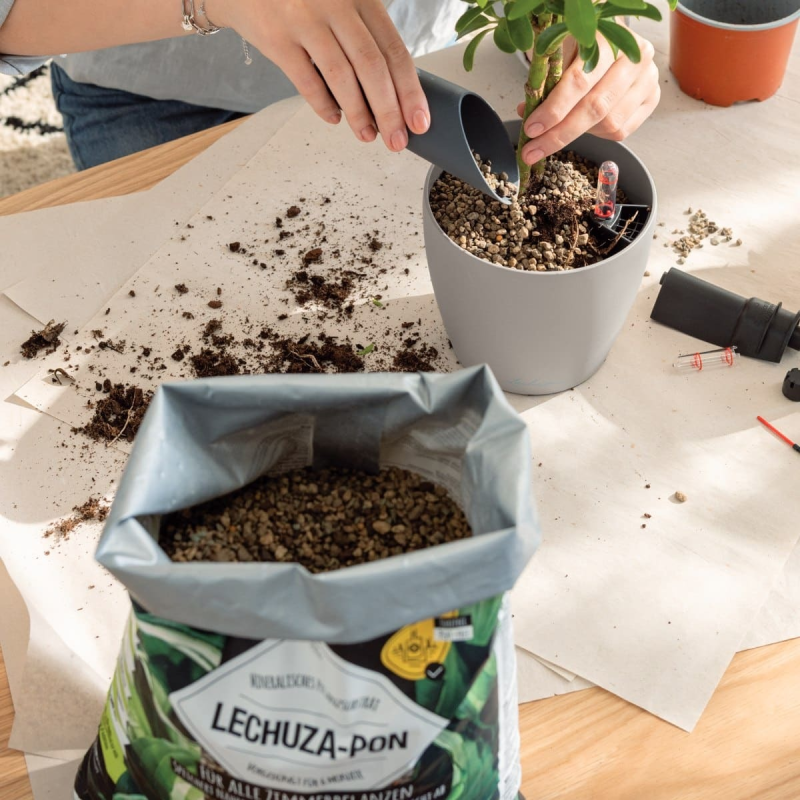
There are two ways of repotting with a self-watering planter: with or without a nursery pot. Lechuza self-watering planters have an insert tray that allows you to plant directly into it, so you don’t necessarily need an additional nursery pot. If you’re repotting your houseplant into a circular self-watering planter, however, you may wish to use one.
If you plant directly into the Lechuza self-watering planter, there’s no harm to the plant, unlike in a traditional planter. This is because the pot has a reservoir beneath the planting plate and the insert can be removed from the self-watering planter at any time to check the root system of your plant.
Planting into a nursery pot first is another way to ensure your houseplant is easily removal from its pot to check root growth.
So, with this in mind, let’s get started!
How do I know if repotting with Lechuza pon is right for me?
Using Lechuza pon and a self-watering planter is a great way to give your plant what it needs without needing to be over-attentive. The semi hydro Lechuza pon substrate means your houseplant will never be sat in moist soil that can cause root rot.
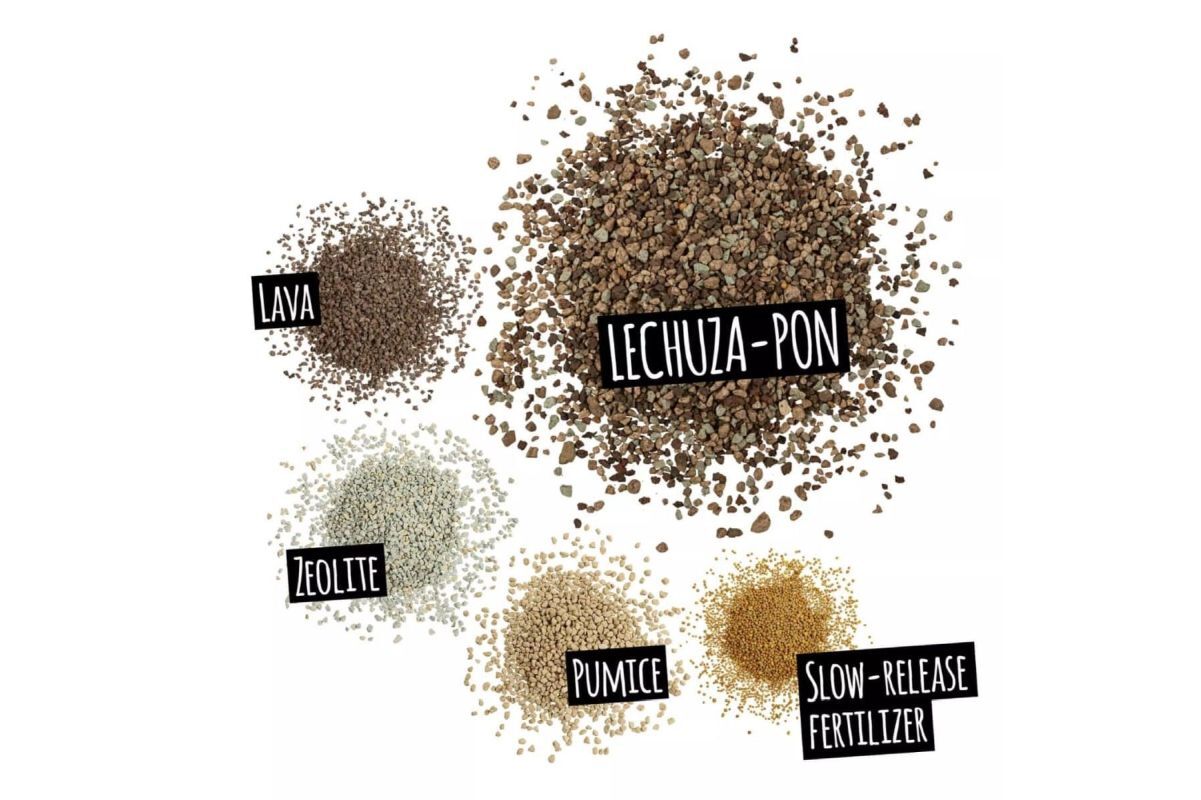
Lechuza pon is a mineral substrate made from rocks, meaning it doesn’t hold as much water as soil. It pairs perfectly with a self-watering planter because the plant can take what it needs from the water reservoir. All this means you’ll find it hard to overwater or underwater your houseplant with Lechuza!
Lechuza pon is a substrate that makes it hard for microorganisms to live in your planter. If you’ve ever noticed annoying little flies emerging from your houseplant soil, then you might have searched everywhere for a solution to stop them breeding. Fungus gnats can’t survive in semi hydro substrate and they don’t live in water reservoirs either, so you’ll see an immediate reduction in annoying flies if you repot your houseplants in Lechuza pon.
Most houseplants do well in pon because it contains slow-release fertiliser. This means your plant’s roots not only have lots of air gaps to breathe, decreasing the chance of root rot, it also means you don’t need to give your plant additional feed if you don’t want to.
You can’t really go wrong with Lechuza pon semi hydro, so, if you’re ready, let’s get your houseplants potted up!
You will need:
Lechuza pon, self-watering planter, a houseplant that needs repotting, a bowl of water, sphagnum moss (optional)
How to repot your houseplant with Lechuza pon
- Prepare your houseplant. Remove your plant from its pot and tap off as much soil as you can. Rinse off any leftover soil by soaking roots in the bowl of water and carefully remove excess soil and substrate by running your fingers through the roots.
- Layer a small amount of Lechuza pon in the bottom of the self-watering planter or in your plastic nursery pot, if using. (If your nursery pot has holes that are too large, you can cover them with a thin layer of sphagnum moss or hessian cloth.)
- Place your houseplant in position in the planter or nursery pot. Be sure to position your houseplant centrally in the pot to allow the roots to grow out evenly to the circumference of the pot.
- Anchor the roots of the plant into the pot by filling around the plant with more Lechuza pon semi hydro. Be sure that all the roots are covered comfortably by the substrate as you fill to a centimetre or so below the rim.
- Prepare your reservoir tray by filling up to the planting line with water. Many houseplants prefer rainwater, so use this if you have access to it
- Put the planter back together with your houseplant insert sitting into the holder in the reservoir planter. You should notice the water level indicator has floated up inside the tube, showing that the reservoir is full.
- Pour through a small amount of additional water to rinse the Lechuza pon substrate through and moisten your houseplant’s roots. If required, use a liquid fertiliser in your water.
See our potting with PON videos for more information
Aftercare
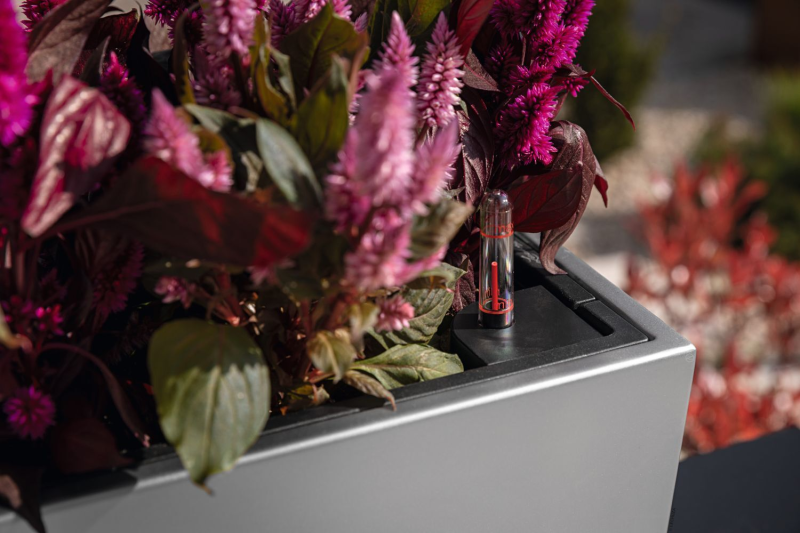
Check whether your houseplant needs watering in its new self-watering Lechuza planter by monitoring the water level indicator. You can also lift the planting insert with your houseplant and Lechuza pon, to check on the water reservoir manually.
Lechuza pon contains slow-release fertiliser but you can fertilise your plants with a liquid fertiliser every other watering when they are growing.
Your houseplant will need repotting once you find roots coming through the bottom of the planter insert into the water reservoir. If you leave them growing in the water reservoir for too long without changing out the water, you may find that they develop root rot.
Find out more about Lechuza pon
Now you’ve repotted with Lechuza pon, wait to see your houseplant grow healthily and happily. If you’d like to find out more about using Lechuza pon, then check out our other blog articles for practical advice on switching your plants to semi hydro.